Roger Ackroyd's No-Disturbance Order
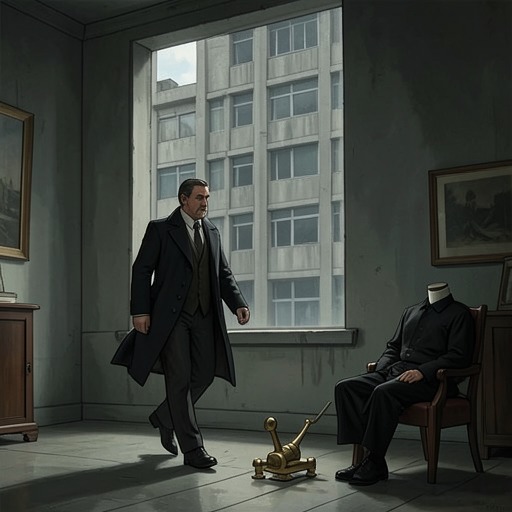
The Murder of Roger AckroydRoger Ackroyd's No-Disturbance Order is the instruction that no one disturb him in his study that evening. It helps explain why the murder might have gone undiscovered until morning—and why the timing of its eventual discovery matters to Poirot's investigation.
The Order in Practice
Flora Ackroyd repeats the instruction to Parker when he enters carrying a tray: Roger does not want to be disturbed again that night. Parker corrects her recollection, saying that, as he remembers it, she had said evening rather than night. The small difference in wording makes the order's scope a matter of testimony, not merely a general rule.
Its Effect on the Discovery
Poirot reasons that, without the telephone call that brought Dr. James Sheppard to Fernly Park, the order would have left little reason for anyone to enter the study that night. Dr. Sheppard agrees: because Roger had instructed the household not to disturb him, the study would probably have remained unvisited until morning. The order therefore helps account for the contrast between the crime's actual discovery that night and its likely discovery the next day.
Importance to Poirot's Reconstruction
The order makes the timing of the call significant. Poirot asks what advantage the murderer gained by ensuring that the crime was discovered that night rather than the following morning. He concludes that the murderer could thereby make sure of being present when the study door was broken open, or at least immediately afterward. The instruction thus functions both as a practical obstacle to discovery and as part of the chain of circumstances from which Poirot infers deliberate control over when the body would be found.
Household Knowledge and Interpretation
The order also appears in the household's explanations of other actions. Mrs. Ackroyd tells Dr. Sheppard that Flora did not want to disturb her uncle and knew where he kept his banknotes; she presents Flora's taking money from his room as an attempt to borrow, not as theft. Her account links the instruction to the household's awareness of Roger's wishes, while her interpretation of Flora's conduct remains her own defense of her daughter. In the investigation, the order's firmer significance lies in its practical consequence: it makes an unexplained visit to the study that night unlikely, and so sharpens the question of why the murder was discovered when it was.